

Social tokens are emerging as one of the most intriguing developments in the crypto market, sitting at the intersection of blockchain technology, creator economies, and online communities. Unlike traditional cryptocurrencies that primarily focus on payments or infrastructure, social tokens are designed to represent the value of people, brands, or communities, giving supporters a way to participate more directly in the ecosystems they help build.
For traders, this introduces a unique asset class influenced not only by market fundamentals but also by community sentiment, creator credibility, and network effects. While the opportunities can be significant, the risks are equally important to understand.
This article explores what social tokens are, why they are gaining momentum, and how their rise could influence the future of crypto trading.
Social tokens are blockchain-based digital assets created around individuals, communities, brands, or organizations. They provide holders with access to exclusive experiences, governance opportunities, rewards, or participation within a specific ecosystem. In simple terms, they allow communities to place value on engagement and shared interests rather than relying solely on traditional social media platforms.
|
Quick Answer: Social tokens are cryptocurrencies tied to a person, community, or brand that enable supporters to access benefits, participate in decision-making, or share in the growth of a digital ecosystem. |
Unlike cryptocurrencies such as Bitcoin, which primarily function as stores of value or mediums of exchange, social tokens derive much of their value from the strength of the communities behind them. The more active and engaged the community becomes, the greater the potential utility and demand for the token.
These tokens can serve a variety of purposes. Creators may offer token holders access to private content or exclusive events, while communities can use them for voting rights and rewarding meaningful contributions. In some cases, social tokens are also traded on cryptocurrency exchanges, allowing investors to speculate on their future growth.
To understand where social tokens fit within the broader digital asset landscape, it's helpful to explore the different types of cryptocurrency, as each category serves a distinct purpose within the crypto ecosystem.
The growing interest in social tokens is closely tied to two major trends shaping the digital economy: the expansion of the creator economy and the emergence of SocialFi.
Creators have traditionally relied on advertising revenue, sponsorships, or platform-controlled monetization programs to generate income. While these models can be effective, they often leave creators dependent on algorithms and intermediaries that control access to their audiences.
Social tokens offer an alternative approach. By issuing tokens linked to their communities, creators can build direct economic relationships with supporters. Token holders may receive exclusive content, early access to projects, voting rights, or other incentives that strengthen long-term engagement.
According to Grand View Research, the global creator economy market was valued at USD 252.33 billion in 2025 and is expected to surpass USD 1.34 trillion by 2033. This growth underscores the rising demand for alternative monetization models, including blockchain-based solutions such as social tokens. As this sector expands, blockchain-based tools such as social tokens could become increasingly attractive for creators seeking greater independence.
SocialFi, short for Social Finance, combines social networking with decentralized finance principles. Instead of users generating value that is captured primarily by platforms, SocialFi aims to distribute that value among participants within the ecosystem.
In SocialFi environments, social tokens can reward engagement, facilitate governance, and encourage stronger community participation. As interest in digital ownership grows, these tokens are becoming a key component of emerging Web3 experiences.
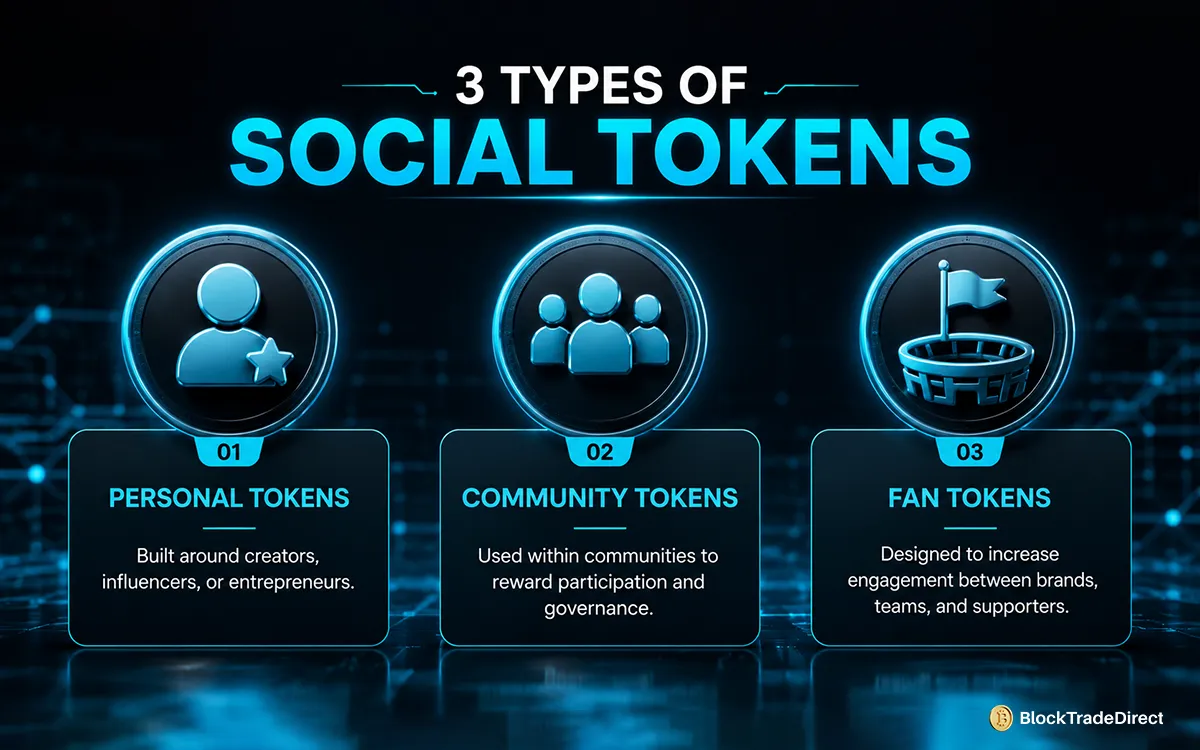
Not all social tokens function in the same way. Understanding the different categories can help investors evaluate their potential use cases and risks more effectively.
Personal tokens are built around individuals such as creators, artists, entrepreneurs, or influencers. Holders may gain access to exclusive content, mentorship opportunities, private communities, or special events.
Because these tokens are closely tied to an individual's reputation and engagement levels, their value can fluctuate based on the creator's ongoing influence.
Community tokens support groups united by shared interests or goals. They are commonly used within decentralized communities to reward contributions and encourage participation.
Token holders may receive governance rights, voting privileges, or access to members-only experiences. Their success often depends on the strength and sustainability of the community itself.
Fan tokens are designed to deepen relationships between organizations and their supporters. They are particularly popular in sports and entertainment, allowing fans to participate in polls, unlock exclusive experiences, and engage more closely with their favorite brands.
Unlike broader social tokens, fan tokens typically focus on engagement rather than creator monetization or community governance.
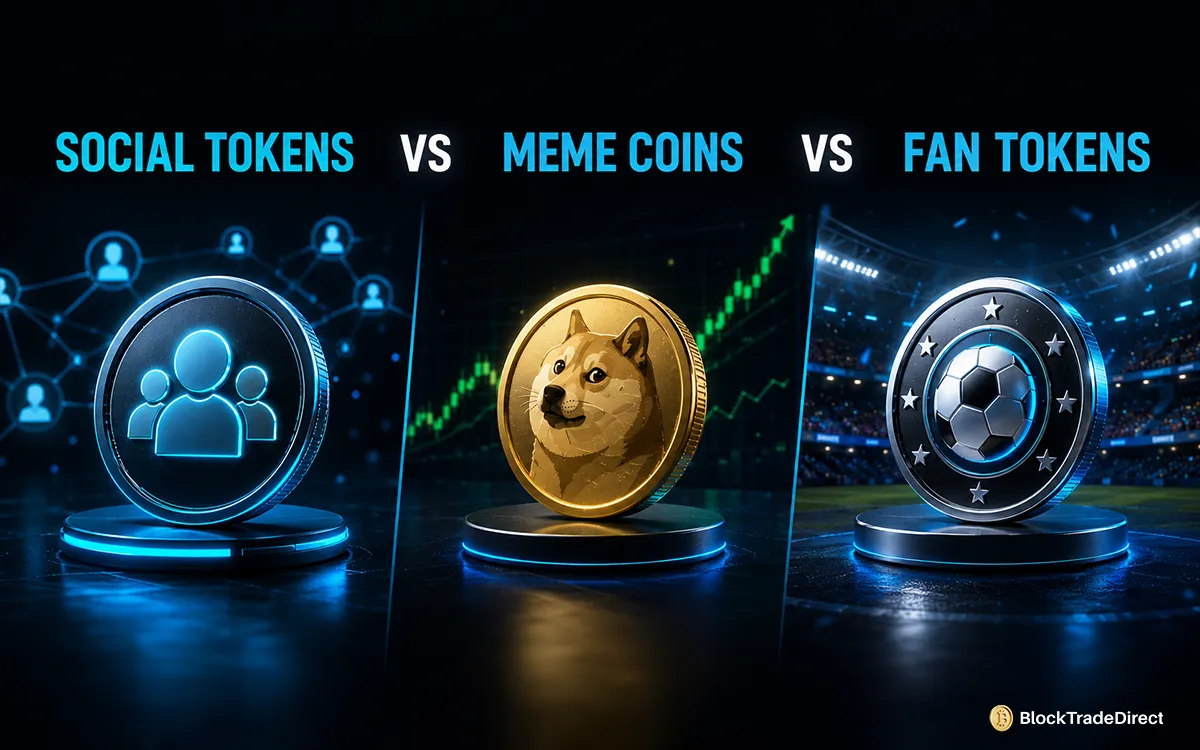
As community-driven digital assets gain popularity, many investors struggle to distinguish between social tokens, meme coins, and fan tokens. While all three benefit from active communities, their purpose and value drivers differ significantly.
Social tokens are built around creators, communities, or decentralized groups. Their primary objective is to encourage participation and provide utility through governance rights, exclusive access, and community incentives.
Meme coins, by contrast, are often fueled by internet culture and speculative enthusiasm. Their value tends to be influenced heavily by market sentiment and viral trends.
Fan tokens occupy a more specialized niche, focusing on strengthening relationships between brands and supporters through engagement-based rewards.
|
Feature |
Social Tokens |
Meme Coins |
Fan Tokens |
|
Primary Purpose |
Community participation and creator monetization |
Speculation and viral appeal |
Fan engagement and rewards |
|
Typical Backing |
Creators, communities, DAOs |
Internet culture and trends |
Sports teams and entertainment brands |
|
Utility |
Governance, access, rewards |
Often limited or evolving |
Polls, experiences, exclusive perks |
|
Key Value Driver |
Community strength and utility |
Market hype and sentiment |
Brand loyalty and fan activity |
|
Risk Profile |
Moderate to high |
High |
Moderate |
|
Target Audience |
Community members and supporters |
Speculative traders |
Dedicated fans |
For readers interested in how community narratives have previously influenced the crypto market, exploring the rise of memecoins can provide valuable context on the role social sentiment plays in driving demand and market behavior.
The rise of social tokens is introducing a new dimension to crypto trading, where community participation and social influence can shape market behavior alongside traditional factors such as supply and demand.
Social tokens generate demand differently from many established cryptocurrencies. As creators and communities expand their reach, supporters may purchase tokens to access exclusive benefits, participate in governance, or align themselves with projects they believe in.
In some cases, community growth itself becomes a catalyst for increased demand and price appreciation.
Social tokens are particularly sensitive to sentiment. A creator launching a new initiative or attracting widespread attention can influence trading activity, while declining engagement may reduce investor confidence.
Unlike traditional assets, social tokens are often shaped by factors such as:
For traders, monitoring community health can be just as important as analyzing technical indicators.
Many social tokens operate within relatively small ecosystems. Lower trading volumes and limited liquidity can contribute to sharper price swings compared with more established cryptocurrencies.
As a result, social tokens may experience:
While volatility can create opportunities, it also increases investment risk.
Despite these challenges, social tokens represent an emerging segment of the crypto market with unique growth potential. Traders who conduct thorough research may identify projects with strong communities, sustainable utility, and promising long-term prospects before they gain mainstream recognition.
However, evaluating social tokens requires looking beyond price charts. Assessing governance structures, community engagement, token utility, and overall project viability can provide a more complete picture of investment potential.
As with any digital asset, disciplined risk management remains essential. The excitement surrounding community-driven tokens should be balanced with careful analysis and realistic expectations.
For traders seeking broader insights into market strategies and investment considerations, exploring dedicated resources on crypto trading and investment can help strengthen decision-making in an increasingly complex market environment.
The appeal of social tokens extends beyond trading activity. By aligning incentives among creators, communities, and investors, these digital assets have the potential to reshape how value is created and shared online.
For creators, social tokens provide opportunities to diversify income streams beyond advertising and sponsorships. By offering exclusive experiences or governance rights, creators can build stronger relationships with their audiences while reducing reliance on centralized platforms.
Communities also benefit from increased participation and shared ownership. Token holders may gain access to exclusive content, contribute to decision-making processes, and earn rewards for meaningful engagement. This transforms audiences from passive consumers into active contributors.
From an investment perspective, social tokens offer exposure to an emerging segment of the crypto market driven by community engagement and digital ownership.
Potential advantages include:
While these opportunities are compelling, investors should evaluate them alongside the risks associated with emerging digital assets.
Despite their potential, social tokens remain a relatively new and evolving segment of the crypto market. Their innovative nature introduces several challenges that traders and investors should consider carefully.
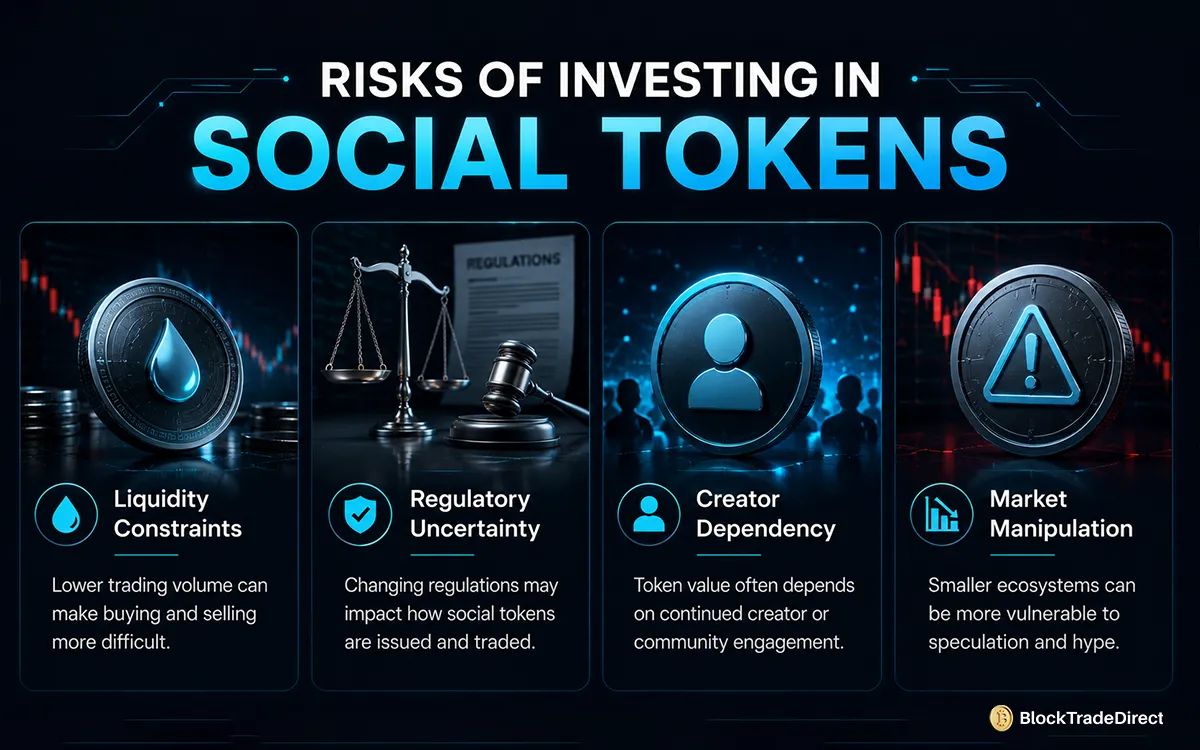
Many social tokens have lower trading volumes than established cryptocurrencies, which can make buying and selling more difficult.
Limited liquidity may lead to:
The regulatory environment surrounding digital assets continues to evolve. Depending on their structure and utility, some social tokens could attract increased scrutiny from regulators.
Changes in legislation may influence how these assets are issued, traded, or marketed, making it important for investors to stay informed about developments within their jurisdictions.
Because many social tokens are closely tied to individuals or niche communities, their success can depend heavily on continued engagement.
Potential risks include:
Smaller token ecosystems can be more vulnerable to hype-driven trading and coordinated market activity.
Investors should be cautious of:
|
Disclaimer: This content is intended for educational purposes only and should not be considered financial or investment advice. Cryptocurrency investments involve risk, and readers should conduct their own research before making investment decisions. |
As social tokens continue to attract attention, distinguishing promising projects from short-lived trends becomes increasingly important.
Strong projects typically provide meaningful use cases, such as governance rights, exclusive access, or reward systems.
Consider asking:
The health of a community can significantly influence a social token's long-term prospects.
Indicators worth reviewing include:
Understanding token distribution and supply dynamics can help investors assess sustainability.
Key areas to evaluate include:
Before investing, review factors such as:
Practical risk-management strategies include:
No framework can eliminate risk entirely, but disciplined decision-making can improve investment outcomes.
For investors seeking to strengthen their broader approach to digital assets, understanding common crypto trading mistakes to avoid can provide valuable guidance.
Social tokens remain an emerging concept, but they reflect broader shifts toward community ownership and decentralized participation.
As SocialFi develops, social tokens could play a larger role in rewarding engagement and encouraging stronger connections between creators and audiences.
Rather than relying solely on advertising-based business models, platforms may increasingly use token incentives to distribute value among participants.
Regulatory clarity could significantly influence the future adoption of social tokens.
Well-defined frameworks may provide stronger investor protections and encourage broader participation. However, additional compliance requirements could create barriers for smaller projects.
The future of social tokens ultimately depends on their ability to deliver sustainable value beyond speculation.
Projects that foster engaged communities, maintain clear utility, and adapt to changing market conditions may be better positioned for long-term relevance. At the same time, technological limitations, regulatory developments, and shifting user preferences will continue to shape the pace of adoption.
For readers interested in the broader trends driving this transformation, exploring what Web3 means for crypto traders and investors can provide additional context.

Social tokens represent a fascinating evolution within the crypto ecosystem, combining elements of community participation, creator monetization, and digital ownership. As interest in SocialFi and Web3 continues to grow, these assets could introduce new opportunities for both creators and traders.
However, social tokens should be approached with balanced expectations. While strong communities and innovative use cases may support long-term growth, investors must also consider factors such as liquidity constraints, regulatory uncertainty, and market volatility.
For traders willing to look beyond traditional metrics, social tokens offer a glimpse into how online communities may shape the future of digital economies. Success in this emerging sector will likely depend on careful research, disciplined risk management, and a clear understanding of the communities driving these ecosystems.
No. Social tokens are a category of cryptocurrency designed around individuals, communities, or brands. Their value is often linked to participation, utility, and engagement rather than functioning solely as payment systems or stores of value.
Social tokens can offer exposure to emerging Web3 trends, but they also involve considerable risk. Investors should evaluate factors such as utility, tokenomics, community strength, liquidity, and long-term sustainability before investing.
Fan tokens are generally issued by sports teams or entertainment brands to enhance supporter engagement. Social tokens have broader applications and may represent creators, communities, or decentralized organizations focused on participation and shared ownership.
Yes. Many social tokens can be bought and sold on cryptocurrency exchanges or decentralized trading platforms. However, lower liquidity and smaller market sizes may contribute to increased volatility.