


RegTech helps crypto platforms stay compliant in the U.S. by using technology to automate key compliance processes such as identity verification (KYC), anti-money laundering (AML) monitoring, transaction screening, sanctions checks, and regulatory reporting. This allows exchanges to detect suspicious activity faster, reduce compliance risks, and adapt more efficiently to changing U.S. regulations.
As crypto adoption grows, U.S. regulators are placing greater focus on how exchanges and trading platforms manage compliance. Concerns around fraud, money laundering, sanctions evasion, and investor protection have pushed many crypto businesses to strengthen their compliance systems.
Agencies such as the Financial Crimes Enforcement Network, the U.S. Securities and Exchange Commission, the Commodity Futures Trading Commission, and the Office of Foreign Assets Control increasingly expect platforms to verify customer identities, monitor transactions, and identify potentially suspicious activity.
According to the 2025 Chainalysis Crypto Crime Report, illicit activity represents only a small portion of overall crypto transaction volume. Even so, concerns around scams, ransomware, and financial crime continue to drive stronger oversight across the industry.
For crypto platforms processing large transaction volumes, managing compliance manually can quickly become inefficient and difficult to scale.
This is where RegTech (regulatory technology) plays an important role.
RegTech refers to software and digital tools that help crypto companies automate compliance-related tasks instead of relying entirely on manual reviews. These systems can verify user identities, screen wallet activity, monitor transactions, flag unusual behavior, and support reporting requirements in real time.
Put simply, RegTech works like a behind-the-scenes compliance system that helps crypto businesses meet regulatory expectations while operating more efficiently.
For crypto platforms, compliance goes beyond simply verifying a user during account creation. Companies are also expected to monitor transactions, identify suspicious activity, comply with sanctions requirements, and maintain records for reporting purposes.
|
Compliance Task |
How RegTech Helps |
|
KYC Verification |
Automates identity checks and fraud detection |
|
AML Monitoring |
Flags suspicious transactions in real time |
|
Sanctions Screening |
Screens wallets and users against restricted entities |
|
Travel Rule Compliance |
Helps securely share required transaction information |
|
Regulatory Reporting |
Maintains audit trails and automates reporting |
Doing all of this manually is difficult at scale. This is where RegTech helps by automating compliance processes and reducing operational burden.
One of the first ways RegTech supports compliance is through Know Your Customer (KYC) verification.
Most regulated crypto platforms require users to verify their identity before accessing trading services. RegTech tools help automate this process by validating IDs, detecting fake documents, and verifying user identities more efficiently.
This helps platforms reduce fraud while meeting customer verification requirements.
RegTech also plays an important role in anti-money laundering (AML) compliance.
Instead of manually reviewing every transaction, compliance systems monitor activity in real time to detect suspicious behavior. This may include:
Many platforms also use blockchain analytics and Know Your Transaction (KYT) tools to assess wallet risk and identify links to scams, fraud, or sanctioned entities.
For example, many regulated crypto platforms use blockchain analytics tools to identify wallets linked to ransomware groups, scam operations, or sanctioned entities before transactions are processed. This helps reduce compliance risks and improve fraud prevention.
If you want to understand how compliant U.S. crypto trading platforms operate, explore BlockTradeDirect’s crypto trading compliance guide.
Crypto businesses operating in the U.S. must also comply with sanctions requirements.
RegTech systems help screen wallets and users against sanctions lists to reduce the risk of prohibited transactions. These tools also support Travel Rule compliance, helping platforms securely share required sender and receiver information during qualifying transfers.
Another key advantage of RegTech is automated reporting.
Instead of relying on manual compliance tracking, platforms can maintain audit trails, document suspicious activity, and generate reports more efficiently when regulators require information.
In practice, RegTech helps crypto companies manage compliance faster, reduce fraud risks, and adapt more easily to changing U.S. regulations.
Crypto regulation in the U.S. involves multiple agencies, and the exact requirements often depend on the services a platform offers. However, most crypto businesses are generally expected to follow rules related to anti-money laundering, customer verification, and sanctions compliance.
Here is a quick look at the main regulators involved in crypto compliance:
|
Agency |
Role in Crypto Compliance |
|
FinCEN |
Oversees anti-money laundering (AML) programs, suspicious activity monitoring, and reporting requirements |
|
SEC |
May regulate crypto assets considered securities and oversee certain investment-related activities |
|
CFTC |
Oversees crypto derivatives and commodities-related activity |
|
OFAC |
Enforces sanctions compliance and restricted wallet screening |
As regulations continue evolving, crypto platforms increasingly rely on RegTech to stay updated, automate compliance processes, and reduce the risk of violations.
|
Disclaimer: This article is for informational purposes only and should not be considered legal or financial advice. Compliance requirements can vary depending on how a crypto platform operates and the applicable regulations. |
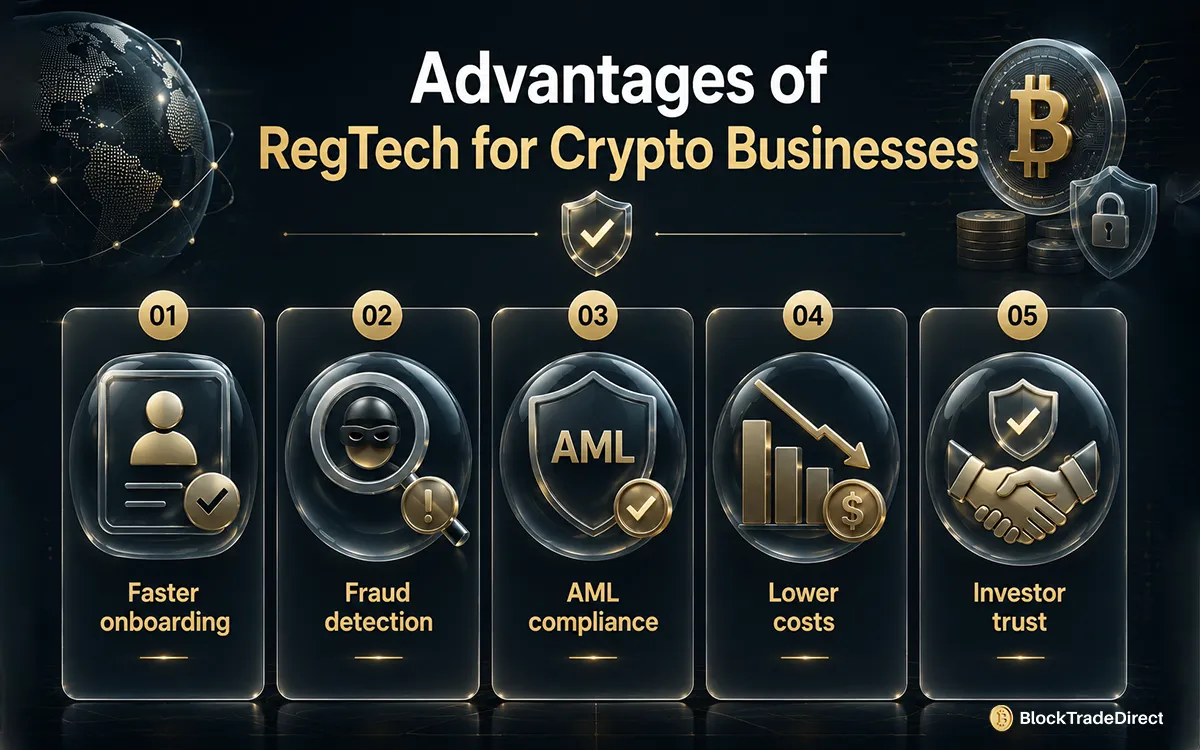
RegTech helps crypto platforms do more than simply meet compliance requirements. It can also improve operational efficiency, reduce fraud risks, and support long-term scalability. It also helps crypto businesses improve efficiency, reduce fraud risks, and scale operations more effectively.
Some of the biggest benefits include:
Automated KYC verification helps users complete identity checks more quickly while reducing delays caused by manual reviews.
Real-time monitoring systems can identify suspicious activity, risky wallets, and unusual transaction patterns earlier.
RegTech helps automate transaction monitoring, risk scoring, and suspicious activity detection, making AML compliance easier to manage at scale.
Automation reduces repetitive manual work, helping compliance teams operate more efficiently over time.
Platforms that prioritize compliance and security may build greater confidence among users, especially in a market affected by scams and exchange failures.
If security matters to you, it’s also worth understanding the security measures that help protect crypto investors before choosing a platform.
While RegTech improves crypto compliance, it is not without challenges. Even advanced compliance systems have limitations, and platforms still need to balance automation with human oversight.
Many crypto users value privacy, but stronger compliance often requires identity verification and transaction monitoring. This creates an ongoing balance between regulatory expectations and user anonymity.
Automated systems do not always get things right. In some cases, legitimate transactions or users may be incorrectly flagged as suspicious, requiring manual review.
Crypto regulations in the U.S. continue to evolve. Platforms must regularly update compliance systems to stay aligned with new guidance and enforcement priorities.
Although RegTech improves efficiency over time, adopting compliance software, blockchain analytics, and monitoring tools can still be expensive for smaller businesses.
In reality, RegTech works best when combined with human expertise rather than replacing compliance teams entirely.

As crypto adoption grows, compliance systems are expected to become smarter and more automated.
Industry research suggests the global RegTech market is expected to continue growing through the late 2020s as financial institutions and crypto businesses invest more heavily in automation, fraud prevention, and real-time compliance monitoring.
Artificial intelligence and blockchain analytics are already helping platforms monitor transactions, reduce fraud risks, and improve suspicious activity detection in real time. Future RegTech systems may also improve wallet screening, risk scoring, and sanctions monitoring.
At the same time, growing oversight around stablecoins, cross-border transactions, and financial crime prevention may increase the need for stronger compliance systems.
As regulation continues to mature, RegTech is likely to become less of a competitive advantage and more of a standard requirement for crypto platforms operating in the U.S.
If you want to understand how regulation could shape digital assets moving forward, explore the differences between CBDCs and Bitcoin for U.S. traders in 2026.
As crypto grows, compliance is becoming a bigger part of how platforms operate in the U.S. Regulators expect stronger safeguards around identity verification, fraud prevention, and anti-money laundering measures.
For crypto businesses, managing these requirements manually can quickly become difficult. RegTech helps solve that challenge by automating compliance processes, improving monitoring, and helping platforms adapt to changing regulations more efficiently.
For investors, stronger compliance may also lead to safer and more trustworthy trading environments. While regulation continues to evolve, RegTech is increasingly helping crypto platforms balance innovation with accountability.
If you’re looking for a platform that prioritizes security and compliance, you can also open a crypto trading account to get started.
RegTech, short for regulatory technology, refers to software tools that help crypto platforms automate compliance tasks such as identity verification (KYC), anti-money laundering (AML) monitoring, transaction screening, sanctions checks, and regulatory reporting.
Crypto exchanges use Know Your Customer (KYC) verification to confirm user identities, reduce fraud risks, and meet anti-money laundering requirements. Many regulated platforms in the U.S. are expected to verify customer information before allowing trading access.
Smaller platforms may handle some compliance manually, but it becomes increasingly difficult as transaction volumes grow. RegTech helps automate monitoring, reporting, and fraud detection, making compliance more scalable and efficient.
RegTech helps detect suspicious transactions, screen risky wallets, flag unusual account activity, and identify patterns linked to scams or illicit financial activity. Many platforms also use blockchain analytics to strengthen fraud prevention.
Crypto platforms in the U.S. may need to comply with anti-money laundering (AML) rules, customer verification requirements, sanctions screening, and reporting obligations. Agencies such as FinCEN, the SEC, CFTC, and OFAC may all play a role depending on the platform’s services and business model.