


Cryptocurrency has transitioned from niche fascination to mainstream investment. More than 120 million Americans own some type of digital asset in 2025, and the market keeps expanding, but so does volatility. Prices move 10% or more in a day, and uninformed choices are expensive.
Being aware of the fundamentals before investing is no longer an option. Understanding how crypto works, projecting and analyzing, and risk-managing are what can keep losses in the thousands and prevent emotional error trading.
In this article, 10 prerequisites that should be familiar to every trader prior to venturing out to invest in cryptocurrency are broken down in detail. From blockchain basics to diversifying your portfolio, security, and tax obligations, this advice helps you invest in crypto, know your way around, and be bold.
Beginning cryptocurrency without research is sailing on a turbulent sea with an eye patch. With the right steps, beginners can trade safely, learn, and not risk it all.
Before you get into crypto investments, you need to learn about the underlying technology. Cryptocurrency is built largely on blockchain, which refers to an internet-based, non-centralized ledger that keeps a complete history of all transactions. In contrast to bank systems, blockchain works without any central authority, so the resulting transactions are open, secure, and tamper-proof.
Decentralization is the most important feature. No single entity controls the network, which brings forth higher levels of trust and reduces manipulation prospects. Implementation of this feature makes it possible to critically review projects, spot red flags, and set up more knowledgeable trade strategies.
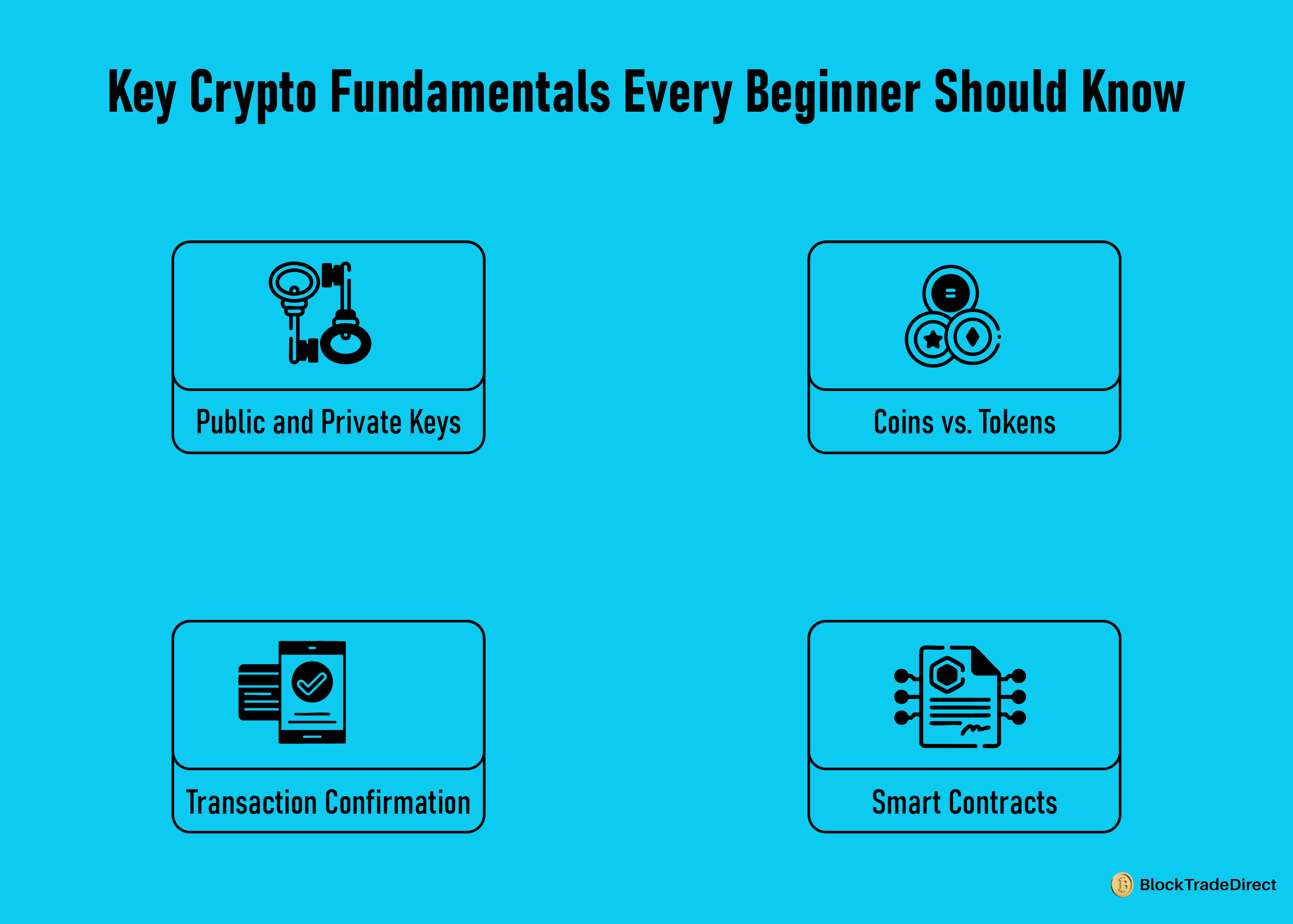
The following are the fundamentals of crypto every new enthusiast needs to know:
Understanding these basics allows you to see past hype and price charts and get an upper hand when it comes to long-term investment and trading. Choosing the right types of cryptocurrency exchanges is useful in optimizing the use of these basics as well.
All crypto projects are not the same. It is very crucial to research a project thoroughly before investing funds. Most losses are made when traders purchase hype without ensuring the fundamentals.
Areas of importance to review:
Here is a quick table to compare key project elements at a glance:
|
Factors |
What to Check |
Red Flags to Avoid |
|
Whitepaper |
Clear goals, roadmap, and technical details |
Vague promises, copied content |
|
Tokenomics |
Supply Limits, Fair distribution |
Extreme concentration, inflationary |
|
Team |
Verified experience, transparent |
Anonymous or untraceable founders |
|
Utility & Market Fit |
Solves real-world problems |
Pure hype, unclear purpose |
|
Community & Partners |
Active user, credible partnerships |
Empty channels, fake endorsements |
Having "How do I know if a crypto project is legit?" streamlined through methodical research is useful because projects that hold up well under these categories are safer to invest in, but nothing is totally risk-free.
Market consciousness is just as vital as technology consciousness. Cryptocurrency prices can fluctuate instantly within a time period, and thus, awareness of trends and charts will prepare you to make informed decisions.
What to study:
A simple chart reading guide is below:
|
Chart Elements |
What it Shows |
Why it Matters |
|
Candlestick Patterns |
Open, close, high, low prices |
Visualize market sentiments |
|
Volume Bars |
Number of coins traded |
Confirms the strength of a trend |
|
Moving Averages |
Average price over a period |
Shows trend direction |
|
Supports & Resistance |
Key price levels |
Helps plan buy/sell points |
|
RSI/MACD |
Momentum and trend signals |
Indicates overbought/oversold |
All of these indicators and trends help to reduce impulsive trades, and it is possible to manage volatility in cryptocurrency markets more effectively. Use the study of charts and fundamental analysis to make better-informed trading decisions, and use guides on how to read cryptocurrency price charts for additional insight.
Selecting the platform will be the difference in your trading existence. Fees, liquidity, security, and user interface decide your profit as much as safety.
There are two broad categories of platforms: centralized exchanges (CEX) and decentralized exchanges (DEX). Both have their advantages and disadvantages.
|
Platform Types |
Key Features |
Pros |
Cons |
|
Centralized Exchange |
Operated by a company, requires an account |
High-liquidity, user-friendly, fast |
Custodial risk, potential hacks |
|
Decentralized Exchange |
Peer-to-peer trading, no central authority |
Full control of assets |
Lower liquidity, complex interface |
Other things to keep in mind when choosing a platform:
Choosing an exchange is based on your experience level and requirements. Beginners would be thrilled to have easy centralized exchanges, yet veterans might appreciate cryptocurrency trading order types in order to be able to use more sophisticated trading techniques.
Investing all your funds in one coin is a dangerous wager with crypto's rollercoaster rides. Diversification distributes risk among a portfolio of assets, safeguarding your investment against unexpected market plunges.
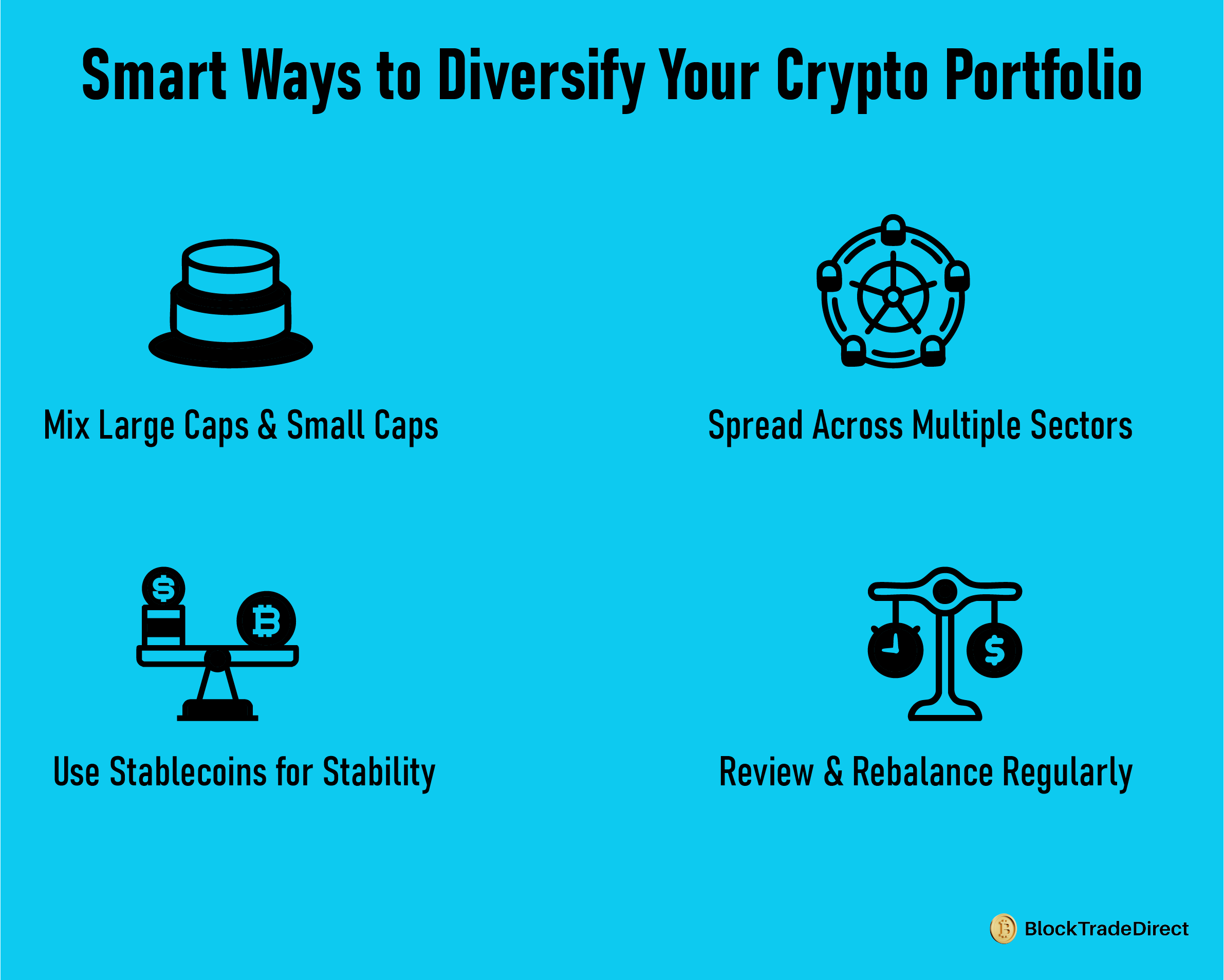
Best methods for diversification:
How diversification helps:
For new investors who ask the question, "How much crypto do I invest?", there is a prevailing methodology of starting small, core positions first, and increasing exposure incrementally as confidence and experience develop.
Risk management is essential when trading cryptocurrency. Market volatility leads even experienced traders to lose huge sums of money without preparation. Risk management protects your money and keeps feelings in check.
Such strategies:
|
Risk Management Tool |
Purpose |
Benefit |
|
Stop-loss Orders |
Limit downside exposure |
Protects capital |
|
Take-profit Orders |
Lock in gains at fixed price levels |
Ensures profit realization |
|
Position Sizing |
Spread risk across several trades |
Reduced portfolio volatility |
|
Diversification |
Invest in industries or coins |
Lessens the impact of a single loss |
Risk management is not an option—it's a foundation for trading. Following these habits can significantly reduce the risk of trading cryptocurrency. Learn more about how to protect your crypto investments.
Securing your cryptocurrency is just as important as choosing a solid coin. Missing money happens through hacking, scams, and misplaced private keys. Security and storage information safeguards your investment.
Types of Wallets:
Security Best Practices
|
Security Measures |
Description |
Why it Matters |
|
Hot Wallets |
Online access for convenience |
Ideal for active trading |
|
Cold Wallets |
Offline storage |
Prevents hacks |
|
Private Key Protection |
Never share keys or online storage |
Needed to keep access |
|
Two-Factor Authentication |
Adds a second verification step |
Reduces risk of account takeover |
Follow these steps not only to prevent losses but also to avoid falling victim to crypto scams and lock your portfolio. Learn more about it in the crypto wallet guide.
Cryptocurrency is not merely up-and-down trading—it is legal. Within the United States, the IRS treats crypto as property, so it creates taxable events each time you trade it. Knowing your taxes saves you from penalties and keeps your investments in good standing.
Points to Keep in Mind:
|
Tax Aspects |
What It Means |
Why It Matters |
|
Capital Gains |
Tax on crypto profits from selling |
Avoid surprise IRS penalties |
|
Taxable Events |
Exchanges, swaps, or spending cryptocurrency |
All of them need to be reported |
|
Crypto Income |
Mining, staking, airdrops |
Need to be reported as income |
|
Documentation |
Keep all transactions documented |
Ensures proper reporting |
For the curious, "Do I owe taxes on crypto in the US?" The answer is yes. Staying compliant keeps the penalties away and your trading within the law.
Emotions are the biggest test for crypto traders. FOMO and influencer or social media mania can result in panic moves and huge losses. Discipline is the key to long-term success.
Tips to Stay Logical:
|
Common Emotional Traps |
How to Avoid |
Impact if Ignored |
|
FOMO |
Stick to the pre-planned strategy |
Overpaying or buying risky assets |
|
Influencer Hype |
Verify fundamentals before investing |
Falling for scams or hype coins |
|
Pump-and-Dump Scheme |
Avoid suspicious social groups |
Rapid losses after price collapse |
|
Impulsive Trading |
Use stop-loss and take-profit orders |
Emotional decisions can wipe out gains |
Self-control, research, and patience always triumph where speculative trading will fail. By remaining level-headed, the traders reduce loss and invest more wisely, and refrain from popular crypto-investment mistakes.
Participation in crypto investment is interesting; it comes with distinctive challenges. Gaining knowledge about basic concepts, carrying out in-depth research on several projects, keeping up with trends in the market, minimizing risks, and emphasizing security make up the foundation of wiser and prudent decision-making.
Main points to consider:
Astute trading starts with discipline, planning, and knowledge-driven decisions. Sticking to these 10 lessons enables you to weather volatility with confidence and reap maximum gains.
Learn how crypto and blockchain work, research each project carefully, and understand the risks before investing. Focus on diversification, security, and a solid trading plan instead of chasing hype.
Start small—only invest what you can afford to lose. Build confidence with major coins first, then explore smaller projects once you understand the market better.
Use a cold wallet for long-term storage and a hot wallet only for active trading. Always keep private keys secure and enable two-factor authentication on every account.
Read the whitepaper, check the team’s credibility, and see if the project solves a real problem. Avoid anonymous teams, vague promises, or unrealistic returns.
Yes, crypto trades, sales, and income from staking or mining are taxable. Keep clear records to report your gains and losses correctly.
Volatility, scams, and poor risk management are the top dangers. Always secure your funds, plan trades in advance, and avoid emotional decisions.
Centralized exchanges are beginner-friendly and offer high liquidity, while decentralized ones give you full control and privacy. Choose based on your comfort with security and trading tools.